Join the conversation
Find out more about the Mindset-XR Innovation Support Programme.
Find out more
NHS logo
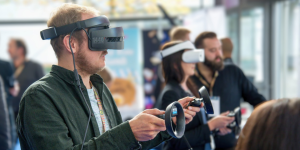
In this blog, Project Support Assistant Rosie White explains what extended reality is, outlines the main types of immersive technology, and shows how they’re being used in healthcare to support patient care, staff training, and innovation in the NHS.
Extended reality (XR) is an umbrella term used to describe immersive technologies that replace, enhance, or combine the physical world with digital experiences.
These experiences enable users to engage with digital environments in a more immersive and realistic way.
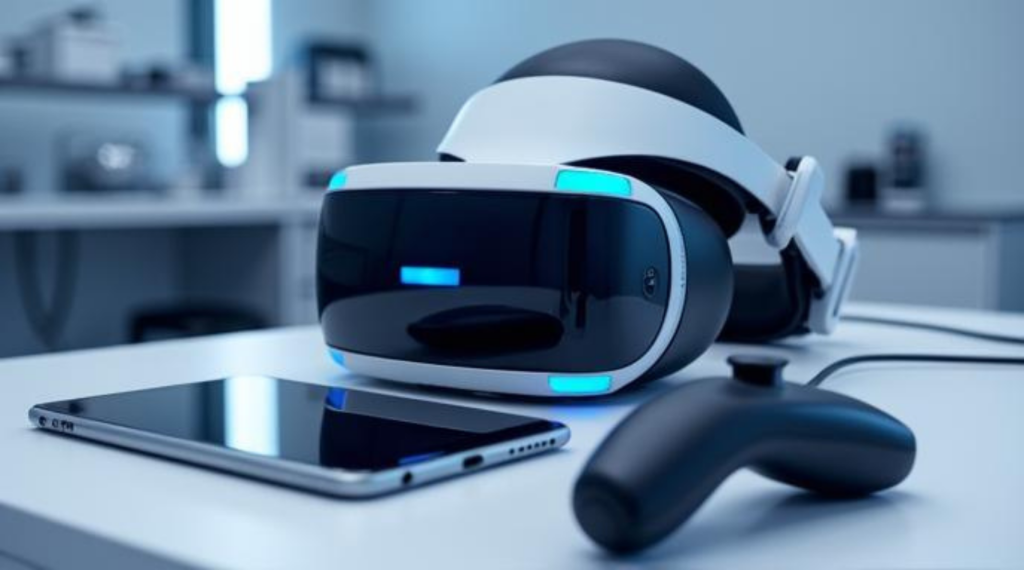
XR experiences are typically delivered through devices such as headsets, smart glasses, smartphones or tablets.
These technologies are widely used to make learning, training, and interaction more engaging by allowing people to learn and practise in hands‑on digital environments.
Since the Covid-19 pandemic, interest in XR has increased significantly, with organisations across many industries using it to support training, collaboration, problem‑solving, and wellbeing, and growing evidence of its value in real‑world settings.
Extended reality includes several distinct but related technologies:
Virtual Reality (VR)
Virtual reality places users inside a fully immersive, computer‑generated 3D environment. Using a headset and often hand controllers, users can interact with digital spaces that feel separate from the physical world.
Augmented Reality (AR)
Augmented reality overlays digital content, such as images, text or animations, onto the real world. AR is commonly accessed through smartphones, tablets or wearable devices like smart glasses, enhancing how users see and interact with their surroundings.
Mixed Reality (MR)
Mixed reality combines elements of both VR and AR. Digital objects can interact with the real environment in real time, allowing users to engage with physical and virtual elements simultaneously
Haptic technology
Haptics simulate the sense of touch, often through controllers or wearable devices such as gloves or vests. Haptic feedback adds physical sensation to XR experiences, making them feel more realistic and immersive.
XR is being adopted across multiple sectors because it offers practical, scalable benefits:
Training and skills development
XR allows people to practise complex or high‑risk tasks in a safe, controlled environment. Training can be standardised and repeated without physical risk or resource constraints.
Efficiency and cost savings
By reducing the need for physical equipment, travel or face‑to‑face delivery, XR can save time and money while maintaining quality.
Innovation and new ways of working
XR enables new approaches to learning, collaboration and service delivery, improving user experience, safety and sustainability.
Alignment with national policy
Immersive technology is increasingly reflected in UK public sector policy, including government, education and healthcare. The NHS Long Term Workforce Plan commits to expanding the use of immersive technologies for education and training, recognising XR as an enabler of workforce growth, safety and productivity alongside AI and other digital tools.
In response to this growing need, XR is increasingly used in mental health care to deliver immersive therapeutic experiences that support assessment, treatment, and self‑management.
Reflecting this demand, healthcare has become one of the fastest‑growing areas for XR adoption in the UK, with an 88% increase in immersive businesses in the sector over the last five years.
XR technologies are now used across a wide range of health and wellbeing applications, including:
Physical rehabilitation
XR is used to support physical rehabilitation by enabling personalised, engaging recovery programmes. For example, Reneural Ltd uses immersive XR technology to support stroke recovery and neurorehabilitation, allowing patients to practise movements, track progress, and stay motivated through tailored digital environments that complement traditional clinical therapy.
Pain management
XR is increasingly used to help manage pain and distress. Nudge Reality’s VR‑based hypnosis creates personalised, responsive environments that support people with Functional Neurological Disorder (FND). These immersive experiences aim to reduce pain and symptoms, encourage engagement with therapy, and complement clinical care while maintaining strong ethical and data‑protection standards.
Patient engagement and early intervention
XR supports patient engagement by providing therapeutic experiences while people wait for treatment. SyncVR Medical UK Ltd’s OASIS project, developed with South London & Maudsley NHS Trust, uses AI‑enabled VR to support people with eating disorders. This approach helps provide early intervention, reduce pressure on specialist services, and offer flexible access to care.
Surgical planning and navigation
In surgical settings, XR is used to support planning and navigation. XRlabs provides mixed reality tools that allow surgeons to visualise anatomy, plan procedures, and rehearse complex operations before entering the operating theatre. This can improve precision, confidence, and communication within surgical teams.
Clinical decision‑making and mental health support
XR supports clinical decision‑making and mental health care through tools such as Animorph’s mixed‑reality application, which helps clinicians and service users identify early signs of relapse. XR also enables people to practise coping strategies, manage symptoms, and build confidence in repeatable, accessible digital environments.
Trauma processing and PTSD support
XR can support trauma processing in a controlled, clinically guided way. Propeer Ltd uses personalised immersive environments to help people with PTSD rehearse real‑world situations, such as social interactions or stressful settings. Exposure can be carefully paced and monitored, helping protect vulnerable users while building coping skills.
Non‑clinical skills and communication
XR is used to develop non‑clinical skills such as communication, empathy, and confidence. Care Reality Ltd creates immersive scenarios that allow health and care staff to practise handling sensitive or challenging situations. These experiences support reflective learning and help staff build confidence in a safe, realistic setting.
The Mindset-XR Innovator Support Programme, funded by Innovate UK, brings together over 70 companies looking at how extended reality (XR) can be used in mental health.
The programme focuses on supporting innovators to make services more engaging, help people earlier, offer more flexible ways to deliver care, help clinicians use their time more effectively — while making sure ethical data use, inclusion, and safeguarding are built in from the start.
Find out more about the Mindset-XR Innovation Support Programme.
Find out moreApril’s Mindset-XR Innovation Support Programme company spotlight shines on Reinhart whose pioneering virtual reality Eye Movement Desensitisation and Reprocessing (VR‑EMDR) solution, combined with pharmacological priming, is pushing the boundaries of immersive digital therapeutics for PTSD.
Final‑year medical student and HIN intern, Sophika Uthayakumar, reflects on a webinar she hosted, highlighting innovative strategies and forward‑looking mental health policies drawn from expert roundtables and national papers.
On 14 April 2026, members of the Mindset‑XR team attended the Health and Life Sciences Showcase at Parliament. The event, hosted by Curia, UKAI, and UK Healthcare and Life Sciences Innovation (UKHLSI), highlighted the Health Innovation Network (HIN) South London’s nomination for the Digital Innovation Award.